
Introduction
At Dplus Technical Services LLC, we understand How to Use Plumber’s Tape can make plumbing tasks more manageable by keeping pipes sealed and watertight. This thin yet durable tape strengthens joints while allowing easy assembly and disassembly when needed. By selecting the right type and applying it properly, our team ensures secure connections that deliver both reliability and convenience across a wide range of projects.
Also known as Teflon tape, PTFE thread tape, or thread seal tape, it is trusted for creating waterproof seals in threaded pipes, valves, and fittings. We use industry-leading options ranging from economy-grade to Hercules Megatape, capable of handling steam, acids, alkalis, hot and cold water, natural gas, and pressures up to 10,000 psi at temperatures between minus 450° and 500° F. Because plumber’s tape is weather-resistant, flexible, and chemically inert, our experts apply it for everything from shower heads to kitchen fittings. While it is simple and safe to use, correct application is essential to prevent sticking, ensure smooth assembly, and achieve lasting results.
What is Plumber’s Tape?
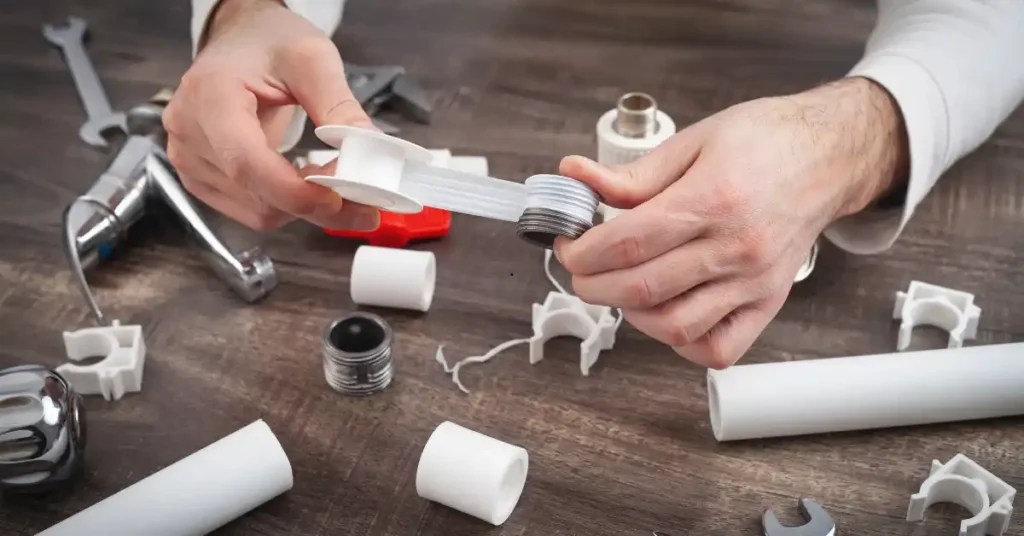
Plumber’s tape is a simple but powerful tool that every DIY enthusiast and professional should know about. Made from polytetrafluoroethylene (PTFE), this fluoropolymer is the same material used in nonstick cookware, eyeglasses, and even razor blades. It is nonflammable, nontoxic, and designed for practical use in plumbing. Often called PTFE tape or by its Teflon brand name, it works as a thread seal to keep pipe wrap projects and construction jobs leak-free. What makes it unique is that it has no adhesive, making it easy to remove later for maintenance or repairs.
From my own experience, I’ve found that plumber’s tape is not only shock-absorbent and resistant to water, chemicals, and high temperatures, but also stretchy and malleable enough to create a watertight seal. It conforms perfectly to threads, helping the male end fit smoothly into the female inside of a pipe.
This prevents gaps that can cause a leak. Many plumbers, contractors, and even roofers use it on connectors without rubber seals to stop leaking. While it’s sometimes mistaken for plastic strapping support you see on shelves, plumber’s tape is a trademark polymer product designed specifically for sealing pipes and ensuring a strong, waterproof connection.
How to Use Plumber’s Tape
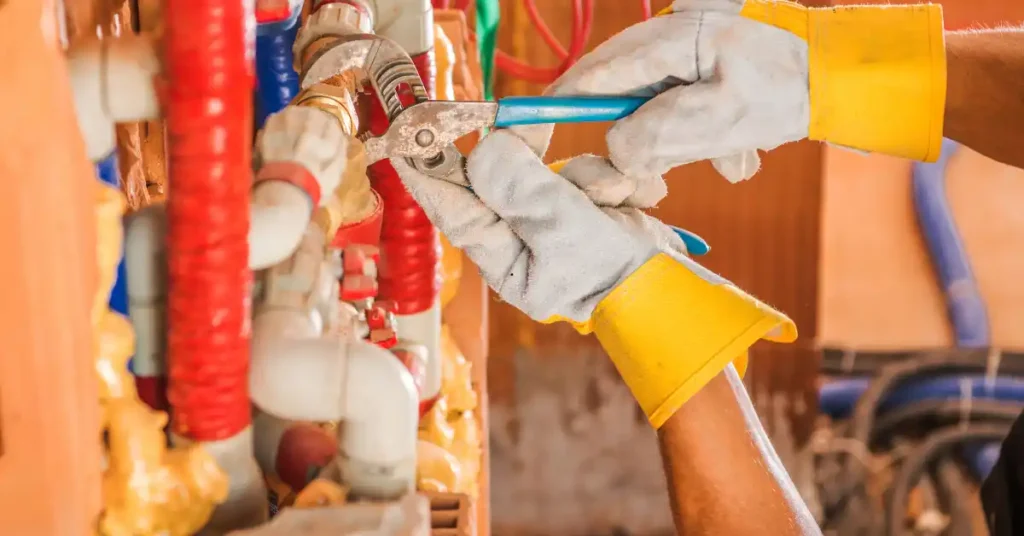
Using plumber’s tape the right way makes your pipe connections watertight and secure. The key is to apply it in the opposite direction of the way the pipe screws into the mount. For example, if the pipe goes in clockwise, you need to wrap the tape counterclockwise. Because it’s soft, you don’t need scissors to cut strips for the application. For a stronger seal, some people use a little pipe joint compound along with the tape to make it tighter.
Step-by-Step Guide
- Clean any debris from the pipes and dry them with a towel to remove all moisture.
- If necessary, add a small amount of compound to the edges of the connectors.
- Attach the tape to the end of the pipe at the second-to-last thread.
- Begin wrapping around the threads and complete two to four rotations.
- Avoid wrapping too tightly, or the water connectors won’t fit.
- Tear off the excess and smooth the edges.
- Always wrap in the same clockwise direction as the fitting so the friction tightens the tape instead of letting it unravel when making the joint.
Uses of Plumber’s Tape
- Versatile tool used by contractors across industries
- Applied on shower heads and arms
- Used for pipe valves and garden hoses
- Common in irrigation systems and toilet fittings
- Works on tub spouts, radiators, and faucets
- Helps secure water heater connections
- Trusted for small and large applications to stop leaks and secure joints
Plumber’s Tape Color Coordination
- Red: Signifies a water main
- Yellow: Used for butane, natural gas, and propane lines
- Pink: Marks water mains
- Gray: For stainless steel, prevents seizing under high or low temperatures
- Green: Identifies oxygen supply
- White: Standard choice for securing joints
When to Use Plumber’s (Teflon) Tape
Plumber’s tape is often used on shower arms, shower heads, and threaded tub spouts where a watertight connection is needed. It also works well on pipe-to-coupling connections and pipe-to-valve connections. In many applications, you can even use it as a substitute for a pipe-joint compound or pipe dope. This tape is reliable on standard metal and rigid plastic materials, sealing pipes effectively when applied properly. It’s a common choice because it simplifies fittings and helps prevent leaks without extra mess.
When Not to Use Plumber’s (Teflon) Tape
Plumber’s tape is not recommended for PVC, copper, or PEX threading since these usually depend on a gasket or O-ring to create a seal. Avoid using it in fluid power or hydraulic systems, or on brass fittings with rubber compression nut flare threads. Combining it with another sealant like pipe dope may overload threads and affect the connection. Also, overheating at high temperatures in industrial use can create perfluoroisobutene, a toxic and potentially fatal gas—so always know the type of job before applying Teflon tape.
Conclusion
At Dplus Technical Services LLC, we see plumber’s tape as more than just a small tool—it’s a vital part of creating safe, watertight, and lasting connections. From shower heads and garden hoses to high-pressure industrial applications, its versatility makes it an essential solution for both professionals and DIY projects. With proper application, color coordination, and an understanding of when and when not to use it, plumber’s tape ensures strong seals, reduces leaks, and supports reliable performance in any plumbing task.
FAQs – How to Use Plumber’s Tape
Is plumber’s tape waterproof?
Yes, plumber’s tape is waterproof and creates an impermeable seal in pipe joints. It can also form air-tight protection to stop air and gas leakages. This makes it reliable for plumbing and gas line applications.
Does Teflon tape use real Teflon?
Many people call it Teflon tape, but it’s not made from DuPont’s proprietary material. Instead, it uses a knockoff version of Teflon powder. It still works effectively for sealing threads.
Do I need to use pipe dope with plumber’s tape?
You don’t always need to use both together, but it can help in some cases. Applying pipe dope on connector joints before wrapping the tape creates a stronger seal. This combination makes the joint more durable and watertight.
How should plumber’s tape be wrapped?
Plumber’s tape should be wrapped in a clockwise direction, matching the pipe’s thread. Wrapping it tightly and keeping it flat ensures the tape doesn’t unravel. This helps the fitting tighten securely.
Can plumber’s tape fix leaks?
Plumber’s tape can temporarily stop leaks, but it’s not a permanent fix. The underlying issue should always be addressed quickly. Proper repairs are necessary to avoid bigger problems.